Growing Culturally Responsive Nutrition Education
Life Education collaborate with Massey University Students to develop nutrition guides
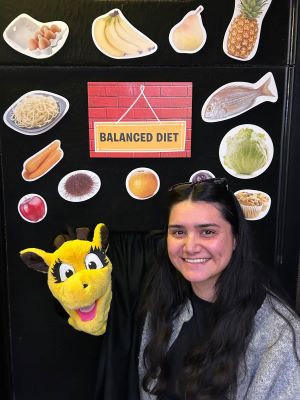 |
When Cheyenne Koro, Nicolas Bejcek, Courtney Pedersen, stepped into a Life Education mobile classroom recently, they didn't expect Harold the Giraffe to feel quite so nostalgic. The three Master’s students in Nutrition and Dietetics from Massey University, all graduates of the Healthy Harold programme, completed a four-week public health placement with Life Education Trust, contributing to a project aligned with Life Ed’s food and nutrition learning topic. The students began by observing sessions in the mobile classroom, then reviewed existing Life Education resources alongside the wider research literature. |
| Cheyenne Koro with Harold the giraffe in a Life Education Trust mobile classroom. | |
From there, they partnered with two cultural advisors, Alex (Sāmoan) and Selu (Tongan), meeting with them several times to shape, test and refine draft resources. Every round of feedback led to real change, from re-explaining values to correcting food examples. The team created food and nutrition guides which they then trial-adapted with existing Life Education resources to test and check that the new guides held up in practice.
The Research
Educating children on food and nutrition is important, no matter the age, gender, ethnicity, or cultural background. Recognising the health inequities and socioeconomic factors that may impact Sāmoan and Tongan children in Aotearoa New Zealand can support educators’ ability to deliver nutrition education that is culturally responsive and relevant.
Pacific communities in Aotearoa are wonderfully diverse. Sāmoan and Tongan tamaiti and fānau bring different languages, beliefs and food practices, and no two households experience culture in quite the same way. Even so, shared values consistently shaped how food is understood: family (ʻāiga, kāinga), respect (fa'aaloalo, faka'apa'apa), spirituality and community connection. Food in both cultures is rarely just nutrition, it’s how love, respect and hospitality are expressed, from a shared prayer before eating to the umu prepared days in advance for a celebration.
The team also drew on holistic Pacific health models, including the Fonofale, which frame wellbeing as physical, spiritual, mental and social all at once and a reminder that nutrition sits within a much bigger picture of hauora.
The Guides
The placement produced two practical, standalone Educator Guides, one for Sāmoan communities and one for Tongan communities. These guides are easy to understand and apply to programme development.
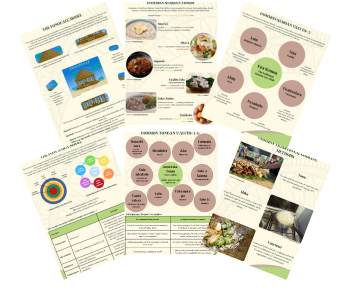
They cover traditional greetings and pronunciation, cultural values, health models, common meals and cooking methods, useful vocabulary for nutrition education, and strengths-based language guidance that may help educators make nutrition learning more relevant and meaningful for children and their families. Alongside these, the team built a reusable, editable template guide so Life Education can develop guides for other communities.
They're intended as a starting point for learning and reflection rather than a checklist and are designed to be used alongside educators' own knowledge of their school community. They are intended to support Life Education educators in adapting nutrition education for Tongan and Sāmoan communities in a culturally responsive and respectful way.
As the students put it, culturally responsive resources are strongest when developed with communities, not just about them without them. The biggest lesson was the value of whakawhanaungatanga, building genuine relationships, something the team will carry into their future practice as dietitians.